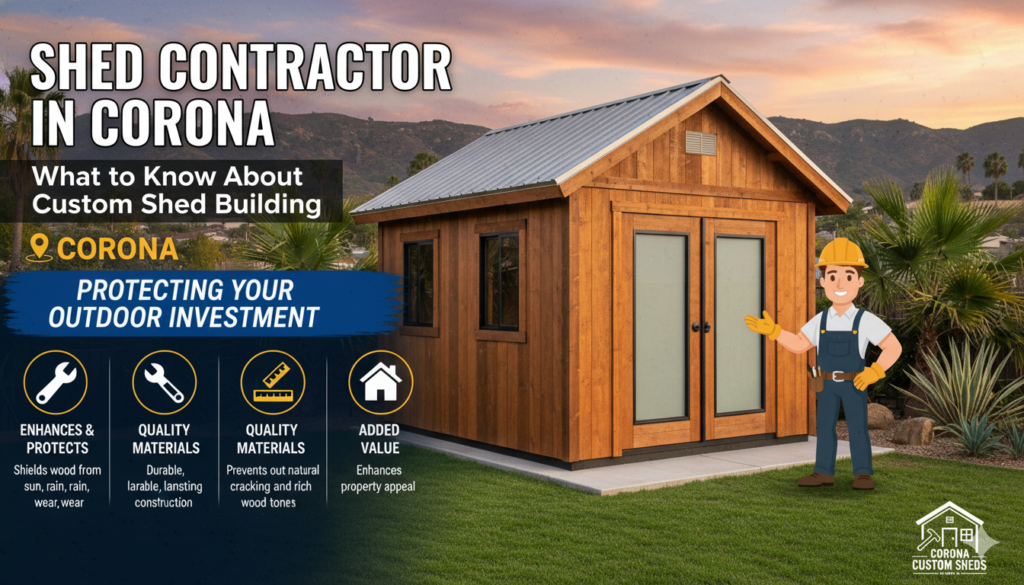
A backyard shed is far more than a simple storage solution. In the hands of a skilled shed contractor, it becomes a purposefully designed structure tailored to a property’s specific layout, a homeowner’s practical needs, and the environmental conditions of the local area. In Corona, California, where the warm climate and spacious residential lots create ideal conditions for outdoor structures, working with a knowledgeable and experienced Shed Contractor Corona ensures that the finished building performs reliably and adds lasting value to the property.
What Does a Shed Contractor Do?
A shed contractor is a building professional who specialises in the design, fabrication, and construction of shed and outbuilding structures. Unlike prefabricated shed kits that are manufactured off-site and delivered in flat-pack form for assembly, a contractor-built shed is constructed on-site from the ground up a process sometimes described as “stick building,” which mirrors the construction method used for residential homes.
The services a shed contractor provides typically include: assessing the site and discussing the homeowner’s vision; developing a design that accounts for the property’s layout, soil conditions, and local zoning requirements; sourcing and selecting materials; pulling any required building permits; constructing the shed’s foundation, framing, roof, cladding, doors, and windows; and finishing the structure to the agreed specification.
Types of Sheds a Contractor Can Build
The range of shed structures a contractor can deliver is broad, and the right type depends on the intended purpose of the space and the property’s characteristics.
- Storage Sheds: The most common type, designed primarily to house tools, lawn equipment, bicycles, seasonal items, and general household overflow. These can range from compact lean-to structures to large multi-door buildings with workshop benches.
- Workshop Sheds: Purpose-built for hobbies, crafts, woodworking, or mechanical work. These typically feature additional windows for natural light, electrical wiring for power tools and lighting, and workbench installations.
- Garden or Potting Sheds: Oriented toward horticultural use, with features such as potting benches, window boxes, skylights, and built-in shelving for seed storage and gardening supplies.
- Barn-Style Sheds: Feature a gambrel or barn-style roofline that maximises interior headroom and storage volume. Popular on larger residential properties and hobby farms.
- She Sheds and He Sheds: Personalised retreats designed as home offices, creative studios, meditation spaces, or hobby rooms. These often feature insulation, electrical installations, and interior finishes that make them comfortable for extended occupancy.
- Pool Houses and Cabanas: Structures positioned near swimming pools for changing, equipment storage, and outdoor entertaining. These may include plumbing for showers and sinks in addition to standard electrical and structural elements.
Why Corona’s Climate Matters for Shed Construction
The Inland Empire climate presents specific considerations for any outdoor structure built in Corona. Summer temperatures regularly exceed 100°F (38°C), placing intense thermal stress on materials. Seasonal rainfall, while not as frequent as in many parts of the country, can arrive suddenly and heavily, testing roofing and drainage performance. Occasional strong winds also require that structures are adequately anchored and framed to withstand wind loading.
A contractor with experience building in Corona understands which materials perform best under these conditions. Inferior lumber or poorly dried wood warps and cracks in the summer heat. Inadequate roofing materials fail under UV exposure. A foundation that does not account for local soil conditions can shift or settle unevenly. Local experience directly translates to better material selection, better construction decisions, and a longer-lasting result.
Permits and Regulations
In California, the requirement for building permits on shed structures depends on the shed’s size, its intended use, and the local jurisdiction’s codes. Many sheds above a certain square footage typically 120 square feet in many jurisdictions require a permit. Sheds that include electrical wiring, plumbing, or are intended for habitable use (such as a home office or studio) almost always require permits regardless of size.
A licensed shed contractor handles the permit application process, submits the required plans to the local building department, and ensures that construction meets the applicable building codes. This is a critical advantage of working with a licensed professional rather than attempting to build without permits or with an unlicensed contractor. Unpermitted structures can create significant complications when a property is sold, and they may have to be removed or modified at the homeowner’s expense if discovered during an inspection.
In California, shed contractors typically hold a General Building Contractor licence (Class B) or a Framing and Rough Carpentry licence (Class C-5), both of which qualify them to construct outbuilding structures. Homeowners should always verify that a contractor is currently licensed and insured before any work begins.
What to Look for in a Shed Contractor
Choosing the right contractor for a shed project involves evaluating several key factors.
Licensing and Insurance: A contractor operating in California should hold a valid Contractors State License Board (CSLB) licence and carry both general liability insurance and workers’ compensation coverage. These protect the homeowner if an accident or property damage occurs during construction.
Local Experience: A contractor who has built many sheds in Corona and the wider Inland Empire region brings practical knowledge of local soil conditions, climate demands, permit processes, and material performance that a contractor without local experience may lack.
Portfolio and References: Reviewing a contractor’s past work through photos, site visits, or conversations with previous clients provides a realistic picture of the quality and range of structures they are capable of building.
Clear Communication: A reliable contractor listens carefully to what the homeowner wants, asks clarifying questions, provides a clear and detailed written estimate, and communicates openly throughout the project. Vague estimates and poor communication are common warning signs.
Warranty: A contractor who stands behind their work typically offers a workmanship warranty that covers defects in construction for a defined period. This is an important marker of confidence in the quality of the work being delivered.
Conclusion
A shed contractor in Corona brings together design knowledge, construction skill, local experience, and regulatory awareness to deliver a structure that meets the homeowner’s needs and stands the test of time in the Inland Empire’s demanding climate. Whether the project is a simple garden storage building or a fully appointed personal studio, the right contractor transforms a backyard vision into a durable, well-built reality. Understanding what a shed contractor does, what types of structures are possible, and what to look for when selecting one puts homeowners in the best position to commission a shed they will value for decades.